The Soothing Connection: How Scent and Sleep Work Together for Better Rest
Many adults toss and turn, chasing rest night after night with little success. Creating calming rituals has become a lifeline for those seeking deeper sleep. One often overlooked tool is the connection between scent and sleep—how certain fragrances gently signal your brain to relax. This post will explain how scent affects sleep, highlight the best scents for sleep, and share safe ways to bring soothing aromas into your bedroom routine.

The Science of Scent and Sleep
Your nose knows more than you might think. The relationship between scent and sleep runs deeper than simple preference—it's wired into your brain's very structure.
Scent's Pathway to the Brain
Your sense of smell takes a direct route to your brain's emotional center. When you breathe in a scent, those molecules travel through your nasal passages to the olfactory bulb, which connects straight to your limbic system—the part of your brain that handles emotions and memories.
This special highway is why smells trigger feelings so quickly. Unlike other senses that must be processed through various brain checkpoints, scent gets VIP access to your emotional core. This is why the smell of cookies might instantly remind you of grandma's kitchen, or why certain fragrances can make you feel calm within seconds.
Research shows this connection works even during sleep. Your brain continues to process smells while you rest, which is why certain scents can make a difference in your sleep quality. This isn't just nice—it's neuroscience at work in your bedroom.
Calming Scents Reduce Anxiety
The right scents can lower your stress levels before bedtime. When you're anxious, your body stays on high alert, making sleep nearly impossible. Calming aromas work by telling your brain it's safe to relax.
Studies show that breathing in certain scents can lower heart rate, reduce blood pressure, and decrease stress hormone levels. This physical relaxation creates the perfect conditions for sleep to arrive naturally.
For many people, bedtime worries create a cycle of poor sleep. Breaking this cycle can be as simple as bringing the right fragrances into your nightly routine. Your brain forms associations quickly—after just a few nights of pairing a specific scent with relaxation, that aroma becomes a signal that it's time to wind down.
The best part? This natural approach works with your body's own systems rather than overriding them like some sleep medications can.
Scent as Part of Sleep Routine
Creating a consistent bedtime ritual tells your brain it's time to shift gears. Scent works as a powerful anchor in this routine, becoming the sensory bridge between daytime alertness and nighttime rest.
Your brain craves patterns. When you use the same calming scent each night as part of your wind-down routine, you're creating a sleep trigger that becomes stronger over time. This is called a "scent association," and sleep experts recommend it for anyone struggling with sleep.
The timing matters too. Start diffusing sleep-friendly scents about 30 minutes before bedtime. This gives your brain time to recognize the signal and begin producing melatonin, your natural sleep hormone.
Remember that scent isn't a magic sleep solution on its own. It works best when paired with other good sleep practices like dimming lights, reducing screen time, and keeping a regular sleep schedule.

Best Scents for Sleep
Not all fragrances support sleep—some might even keep you awake. Knowing which scents promote rest can transform your nighttime experience.
Lavender's Relaxing Benefits
Lavender stands as the undisputed champion of sleep-friendly scents. This purple flowering herb has been used for centuries to promote relaxation, and modern science backs up this traditional wisdom.
Research has shown that lavender can actually decrease heart rate and blood pressure, putting your body in the perfect state for sleep. In one study, people who breathed lavender before bed reported falling asleep faster and waking up feeling more refreshed than those who didn't.
What makes lavender so special? It contains linalool and linalyl acetate, natural compounds that calm your nervous system. These compounds work directly on brain receptors to help quiet an overactive mind.
For best results, look for pure lavender essential oil rather than synthetic versions. True lavender has a sweet, herbal scent with slightly woody undertones—never sharp or perfumey.
Top Sleep-Friendly Aromas
Beyond lavender, several other scents can help guide you toward better sleep.
Chamomile ranks high on the list with its apple-like fragrance that soothes frazzled nerves after a long day.
Vanilla works wonders for many people, creating feelings of comfort and safety. This makes sense when you consider that vanilla contains compounds similar to breast milk, triggering deep comfort responses in the brain.
Cedarwood offers a grounding, earthy quality that helps quiet racing thoughts. Its woodsy warmth pairs beautifully with lavender for a balanced sleep blend.
Bergamot stands out among citrus oils for its unique ability to both uplift and calm—perfect for those who feel both tired and wired at bedtime. Unlike other citrus scents, bergamot won't keep you awake.
Finally, Herbal scents like marjoram and clary sage round out the list, both offering deep relaxation benefits without the heaviness of some floral options.
Bright vs. Grounding Scents
The type of scent that helps you sleep best might depend on what's keeping you awake. Understanding the difference between bright and grounding scents can help you choose wisely.
Bright scents like bergamot, ylang-ylang, and neroli work best if anxiety keeps you awake. These scents lift heavy emotions while still promoting relaxation. They're particularly helpful if you tend to feel down or overwhelmed at bedtime.
Grounding scents like sandalwood, patchouli, and frankincense work better for people whose minds race with thoughts and plans. These earthy fragrances act like anchors, pulling scattered energy downward and inward.
Some people benefit from a two-phase approach: starting with a bright scent during their evening routine, then switching to something more grounding right before bed. This mimics the natural transition from evening activities to deep sleep.
Pay attention to how different scents make you feel. Your personal response matters more than general guidelines, as scent preferences are deeply personal.
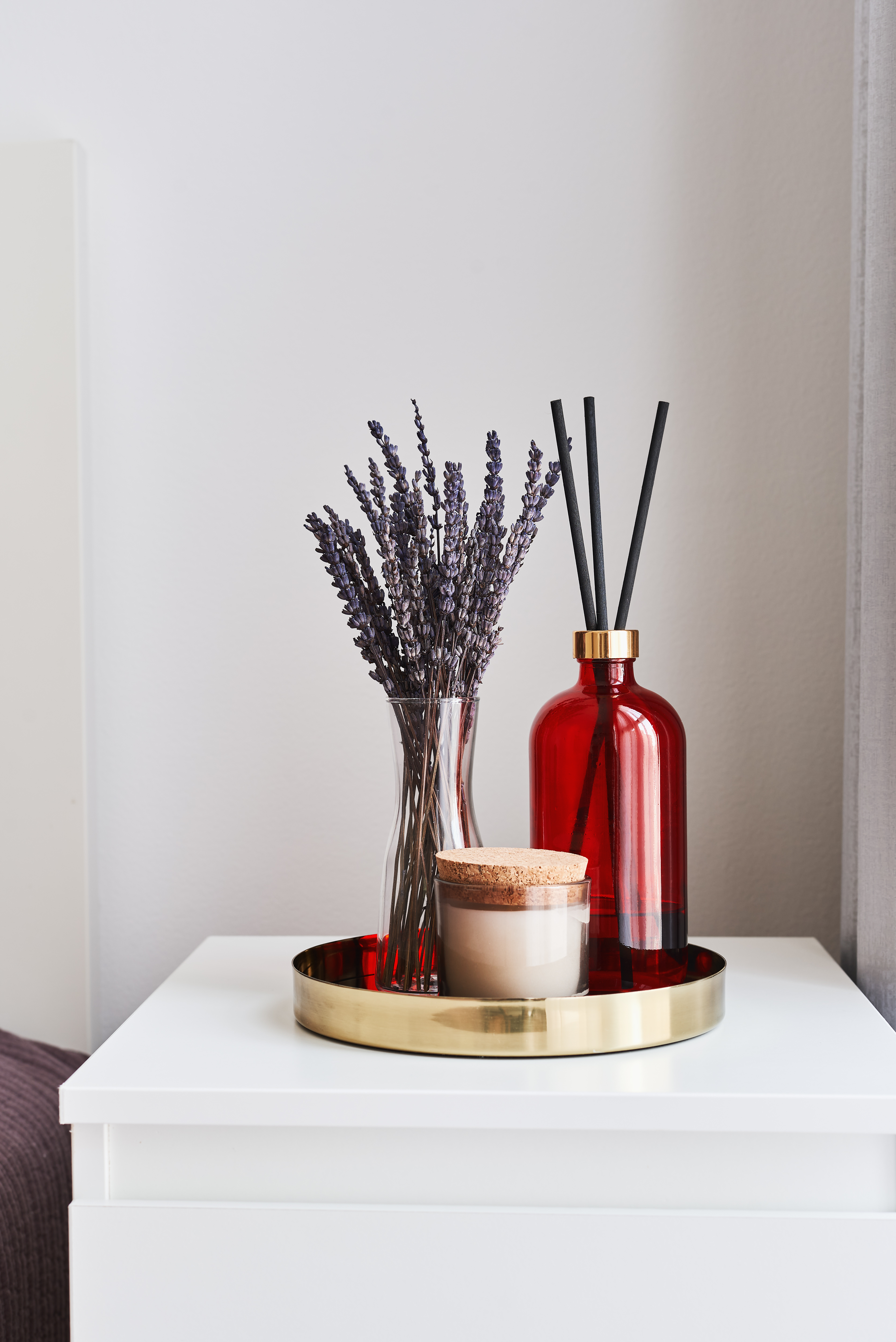
Incorporating Scent into Nighttime
Once you've found your perfect sleep scents, the next step is bringing them into your bedtime routine in ways that are both effective and safe.
Candles and Safety Tips
Candles create a sleep-friendly atmosphere with their soft flickering light and gentle scent. The warm glow signals to your brain that it's time to wind down, making them perfect for the early part of your bedtime routine.
Choose candles made with natural waxes like soy or beeswax, which burn cleaner than paraffin. Look for those scented with essential oils rather than synthetic fragrances for a more authentic aroma that supports sleep.
Safety comes first with bedroom candles. Always place them on stable, heat-resistant surfaces away from curtains, bedding, and other flammable items. Keep them where pets and children can't knock them over.
The most important rule: never fall asleep with candles burning. Make extinguishing candles a non-negotiable part of your routine—do it before you get into bed, not as you're drifting off. Battery-operated flameless candles offer a safer alternative if you tend to fall asleep quickly.
Bedtime Diffuser
Cold-air diffusers like the ones we offer at Potion & Twig offer the perfect hands-off way to fill your bedroom with sleep-friendly scents. Unlike candles, most diffusers can safely run while you sleep, creating a consistent scent environment throughout the night.
Set your diffuser schedule, if available, to prevent scent fatigue and use less oil while still maintaining the sleep benefits. Place it away from your direct breathing space—across the room works better than right next to your pillow.
For best results, start your diffuser 30 minutes before bedtime so the scent has time to fill the room. Many diffusers have auto-shutoff features or timers, which are perfect if you're concerned about running them all night.
Bath Rituals
Pre-bedtime baths offer another powerful way to use scent for sleep. The combination of warm water and calming aromas creates a double relaxation effect. Add 5-7 drops of essential oil mixed with a tablespoon of carrier oil to your bathwater.
Time your bath for about an hour before bed. This gives your body time to cool down afterward, which triggers natural sleepiness. The scent will linger on your skin, continuing to work as you get into bed.
Scent: Supporting Deep, Restorative Sleep
The connection between scent and sleep offers a gentle, natural path to better rest. By understanding how your brain processes aromas and choosing the right scents for your needs, you can create a bedroom environment that truly supports deep, restorative sleep. Bringing calming fragrances into your nighttime routine might be the missing piece in your quest for better sleep.